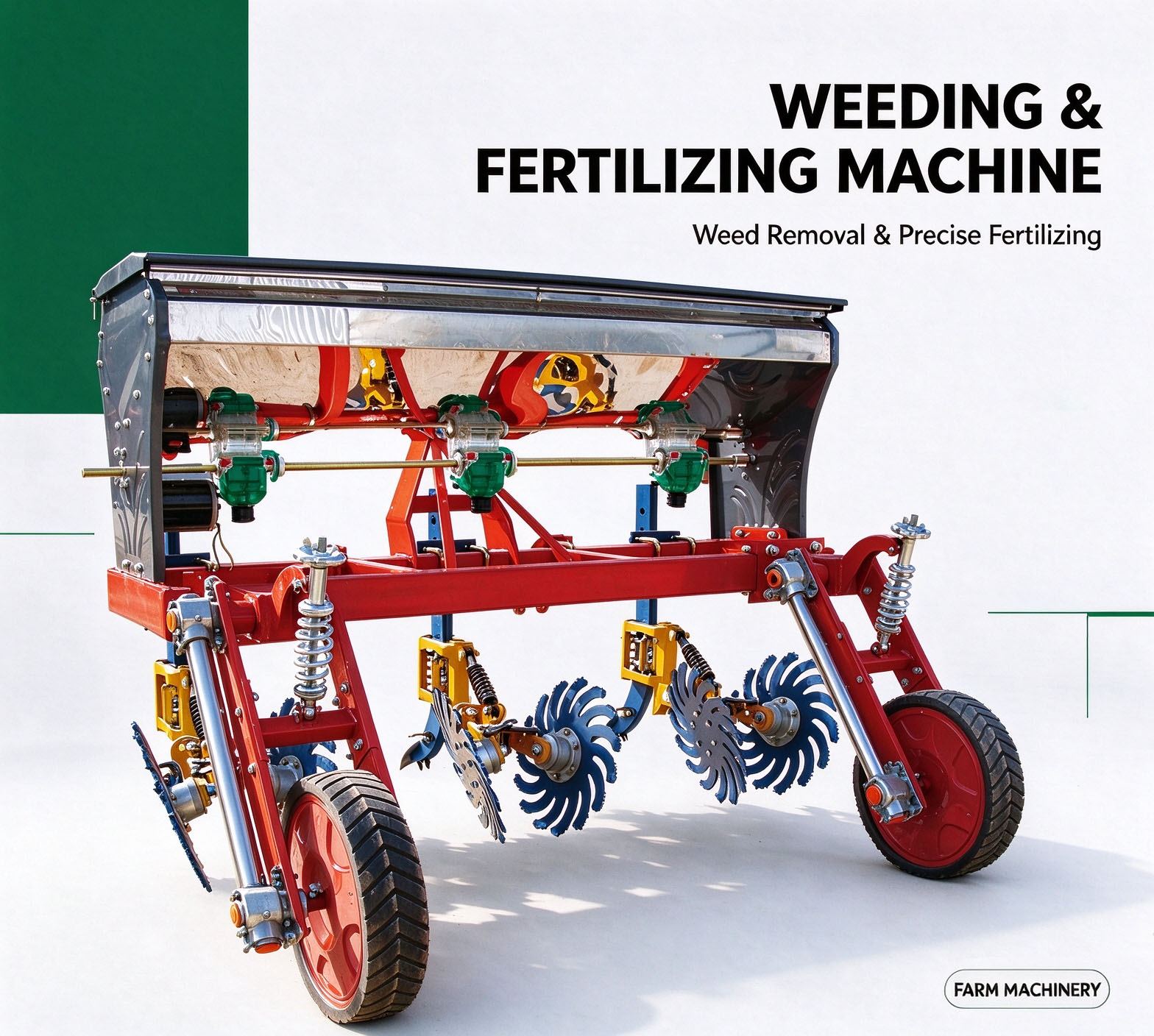
Agricultural machinery has been the backbone of modern farming, transforming agriculture from labor-intensive practices into highly efficient, scalable, and productive systems. From the earliest wooden plows pulled by oxen to today’s GPS-guided autonomous tractors, the evolution of agricultural machinery reflects humanity’s relentless pursuit of feeding a growing global population. As the world faces challenges such as climate change, soil degradation, and water scarcity, the role of agricultural machinery has become even more critical. This article explores the types, benefits, technological advancements, and future prospects of agricultural machinery, highlighting its indispensable contribution to global food security.
The history of agricultural machinery dates back thousands of years, but the true revolution began in the 18th and 19th centuries with the Industrial Revolution. The invention of the mechanical reaper by Cyrus McCormick and the steel plow by John Deere marked the beginning of mechanized farming. These innovations reduced manual labor and increased crop yields dramatically. The introduction of the internal combustion engine further accelerated progress, leading to the development of tractors, combine harvesters, and other powered equipment. By the mid-20th century, farming had become heavily mechanized in developed countries, and the Green Revolution of the 1960s relied on machinery, along with high-yielding crop varieties and fertilizers, to boost food production across Asia and Latin America.
Today, agricultural machinery encompasses a wide range of equipment designed for every stage of crop production and livestock management. Tractors are the workhorses of the farm, used for plowing, tilling, planting, and hauling. Combine harvesters, also known as combines, are versatile machines that efficiently harvest grains such as wheat, corn, and soybeans by cutting, threshing, and cleaning the crop in a single pass. Planters and seeders ensure precise seed placement at optimal depths and spacing, leading to uniform germination and better yields. Sprayers apply fertilizers, pesticides, and herbicides, while irrigation systems, including center pivots and drip irrigation, provide water efficiently. In livestock farming, machinery such as automatic milking machines, feed mixers, and manure management systems improve animal welfare and farm profitability.
The benefits of agricultural machinery are profound. First and foremost, machinery increases productivity. A single modern combine harvester can harvest thousands of acres in a day, a task that would take dozens of workers weeks to complete. This efficiency allows farmers to manage larger farms with fewer laborers, addressing labor shortages that plague many rural regions. Machinery also improves precision and consistency. With the advent of precision agriculture, machines equipped with GPS, sensors, and data analytics can apply inputs like seeds, water, and chemicals only where and when needed. This reduces waste, lowers costs, and minimizes environmental impact. Furthermore, machinery enhances soil health when used appropriately. No-till drills and vertical tillage tools help preserve soil structure, reduce erosion, and sequester carbon, contributing to climate change mitigation.
Technological advancements in agricultural machinery have accelerated in recent decades, driven by digitalization, automation, and artificial intelligence. Autonomous tractors and robotic harvesters are becoming viable, reducing the need for human operation and enabling 24/7 farming. Drones are used for aerial surveying, crop monitoring, and even targeted spraying, providing real-time data that informs decision-making. Smart machinery equipped with machine learning algorithms can detect diseases, pests, and nutrient deficiencies early, allowing for rapid intervention. The integration of the Internet of Things (IoT) enables seamless communication between machines and farm management software, creating a connected farm ecosystem. For example, a tractor can automatically adjust its route based on soil moisture data, and an irrigation system can activate based on weather forecasts. These innovations not only increase efficiency but also promote sustainable farming practices by optimizing resource use and reducing greenhouse gas emissions.
Despite the numerous advantages, the adoption of agricultural machinery is not without challenges. The high capital cost of modern equipment is a significant barrier for smallholder farmers in developing countries. Many of these farmers rely on manual labor or animal traction, and the leap to mechanization requires access to credit, training, and maintenance services. Furthermore, over-mechanization can lead to soil compaction, which degrades soil structure and reduces water infiltration. The use of heavy machinery on fragile soils, especially when fields are wet, can cause lasting damage. Another concern is the environmental footprint of manufacturing and operating machines, which consumes fossil fuels and emits carbon dioxide. However, manufacturers are addressing this by developing electric tractors, hydrogen fuel cells, and bioenergy-powered equipment. Additionally, the shortage of skilled labor to operate and maintain advanced machinery poses a problem, especially as farms become more technology-dependent. Education and vocational training are essential to bridge this gap.
The future of agricultural machinery lies in sustainability, intelligence, and accessibility. Precision and conservation agriculture will continue to shape equipment design, focusing on minimizing soil disturbance, optimizing input use, and integrated pest management. Autonomous and collaborative robots will likely work alongside humans, performing tedious or dangerous tasks with high precision. Advances in battery technology may lead to widespread adoption of electric machinery, reducing on-farm emissions. Moreover, smaller, affordable, and modular machines could enable smallholder farmers to benefit from mechanization. Platforms like equipment-sharing cooperatives and rental services are already emerging, allowing farmers to access expensive machinery without owning it. Policy support, such as subsidies for precision tools and investments in rural infrastructure, will be crucial to ensure that the benefits of mechanization are equitably distributed.
In conclusion, agricultural machinery is not merely a collection of tools; it is a transformative force that shapes how we grow food, manage natural resources, and sustain rural livelihoods. From the mechanical revolution of the past to the digital and autonomous revolution of the present, machinery has continually pushed the boundaries of what is possible in agriculture. As we face the daunting task of feeding nearly 10 billion people by 2050 while protecting the planet, agricultural machinery will be at the forefront of solutions. By embracing innovation, promoting sustainable practices, and ensuring inclusive access, we can harness the full potential of agricultural machinery to build a resilient and food-secure future for all.
Maitesike Agricultural machinery +86 19831734561 susuchaoagro@gmail.com Alibaba store
New Details
- Home
- news view

Agricultural Machinery: Revolutionizing Farming for a Sustainable Future
Recent Posts